Introduction
Visual merchandising plays a crucial role in modern retailing because it helps stores attract customers and create memorable shopping experiences. In addition, it combines creativity, design, and marketing to present merchandise in an appealing manner. As a result, customers are more likely to enter the store, explore products, and make purchases. Furthermore, effective visual merchandising strengthens brand identity and improves customer engagement. For MBA and MMS students, understanding visual merchandising is essential because it directly influences consumer behaviour and retail performance.
What is Visual Merchandising?
Visual Merchandising (VM) refers to the art and science of presenting products and designing store layouts to maximize sales and enhance customer experience. It involves creating attractive displays that educate customers, generate interest, and motivate them to purchase merchandise.
Visual merchandising helps retailers:
- Attract customer attention
- Create product awareness
- Encourage store visits
- Improve product visibility
- Influence buying decisions
- Enhance brand image
- Increase sales and profitability
Importance of Visual Merchandising
Importance of Visual Merchandising
Visual merchandising serves as a silent salesperson within the store. Moreover, it communicates product benefits without requiring direct interaction from sales personnel. As a result, customers can better understand products and make informed purchase decisions. Furthermore, attractive displays encourage shoppers to spend more time exploring merchandise. Consequently, retailers often experience higher sales and stronger customer engagement. In addition, effective visual merchandising strengthens brand identity and differentiates stores from competitors.
Benefits of Visual Merchandising
It offers numerous advantages to retailers. For example, attractive displays create a positive first impression and draw customers into the store. Additionally, engaging layouts improve the overall shopping experience. Similarly, well-organized displays increase product visibility and encourage impulse purchases. As a result, customers spend more time browsing products. Therefore, retailers can achieve greater sales productivity and customer satisfaction.
Key Components of Visual Merchandising
Visual merchandising involves several elements that work together to create attractive retail displays. These include colour, creativity, lighting, props, backgrounds, interiors, flooring, and mannequins.
Elements of Visual Merchandising
1. Colour
Colour is one of the most powerful visual merchandising tools. For instance, bright colours often attract attention, while softer shades create a relaxed atmosphere. Additionally, colour influences customer emotions and perceptions about a brand. Therefore, retailers carefully select colour schemes that match their target audience and brand personality.
2. Creativity
Creativity helps retailers develop unique and memorable displays. Rather than limiting displays to seasonal themes, stores can also incorporate festivals, special occasions, and local events. For example, retailers frequently design displays around Mother’s Day, Valentine’s Day, or back-to-school campaigns. As a result, customers experience fresh and engaging store environments throughout the year.
3. Lighting
Lighting plays a crucial role in visual merchandising. Firstly, it highlights featured products and promotional displays. In addition, proper lighting improves visibility throughout the store. Meanwhile, decorative lighting helps create a pleasant atmosphere that enhances customer comfort. Consequently, shoppers are more likely to remain in the store for longer periods. Ultimately, better lighting contributes to a superior shopping experience.
4. Props
Props support merchandise presentation and help create visual stories. For instance, a travel bag may be displayed alongside passports and maps to create a travel theme. Similarly, sportswear can be showcased with fitness equipment. As a result, customers can better visualize product usage. Furthermore, creative props make displays more memorable and engaging. Therefore, they contribute significantly to merchandising effectiveness.
5. Background
The background of a display serves as the visual foundation for merchandise presentation.
An effective background:
- Enhances product attractiveness
- Supports display themes
- Improves visual focus
- Creates depth and dimension
Retailers often use graphics, wallpapers, fabrics, and digital screens as backgrounds.
6. Store Interiors
Store interiors significantly influence customer comfort and navigation. Moreover, a well-designed interior encourages shoppers to spend more time browsing merchandise. In addition, effective signage and organized aisles make shopping easier and more enjoyable. Consequently, retailers can improve customer satisfaction and increase the likelihood of purchases.
7. Flooring
Flooring contributes significantly to the store’s visual identity and customer experience.
Different retailers use different flooring styles depending on their brand image.
Examples:
- Carpet flooring in jewellery stores
- Marble flooring in luxury boutiques
- Easy-to-maintain tiles in supermarkets
Flooring should complement wall colours and store themes.
8. Mannequins
Mannequins help retailers showcase apparel, accessories, and fashion trends.
Benefits include:
- Demonstrating product usage
- Inspiring outfit combinations
- Increasing product visibility
- Creating aspirational appeal
Fashion retailers frequently use mannequins in window displays and store entrances to attract customers.
Retail Fixtures in Visual Merchandising
Retail fixtures are display structures used to organize and present merchandise effectively.
They help retailers:
- Improve product accessibility
- Optimize floor space
- Create attractive displays
- Enhance customer convenience
Four-Way Fixture
A four-way fixture consists of two crossbars positioned perpendicular to each other on a pedestal. It allows retailers to display multiple products in a compact area.
Round Rack
A round rack is a circular fixture placed on a pedestal that allows merchandise to be displayed around all sides. It is commonly used for apparel displays.
T-Stand
A T-stand is a freestanding fixture shaped like the letter “T.” It is widely used for displaying garments on hangers.
Carousel
Carousels are circular rotating racks that enable customers to browse merchandise conveniently from multiple angles.
Window Displays
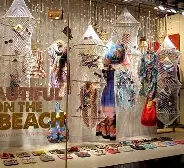
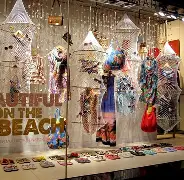
Window displays are among the most effective visual merchandising tools. Firstly, they capture the attention of people passing by the store. Secondly, they communicate the store’s theme and product offerings. Moreover, attractive window displays create curiosity and encourage store visits. As a result, retailers can increase foot traffic without extensive advertising. Therefore, many retailers invest heavily in designing creative and eye-catching windows.
Types of Window Displays
Open Front or No Window Display
In this format, the entire front of the store is exposed to the public, allowing customers to see directly inside the store.
Showcase Window
Showcase windows are commonly used by stores selling smaller products such as jewellery, watches, cosmetics, and accessories. These displays attract customers by highlighting selected merchandise.
Visual Merchandising Strategies Used by Retailers
Modern retailers use various visual merchandising strategies to increase customer engagement:
Theme-Based Displays
Stores create seasonal and festival-themed displays for occasions such as:
- Diwali
- Christmas
- Eid
- Valentine’s Day
- Mother’s Day
- Back-to-School campaigns
Cross-Merchandising
Related products are displayed together to encourage additional purchases.
Examples:
- Pasta with pasta sauce
- Shirts with ties
- Smartphones with accessories
Feature Displays
Retailers highlight new arrivals, premium products, or promotional items at strategic locations.
Lifestyle Displays
Products are arranged to demonstrate real-life usage and inspire customers.
Impact of Visual Merchandising on Consumer Behaviour
It has a significant influence on consumer behaviour. For example, attractive displays capture customer attention immediately. In addition, organized product presentations simplify the shopping process. Furthermore, appealing store environments create positive emotional responses. Consequently, customers often spend more time browsing products. As a result, the likelihood of purchase increases substantially. Overall, visual merchandising enhances both customer satisfaction and retail performance.
Challenges in Visual Merchandising
Retailers often face challenges such as:
- High display costs
- Frequent redesign requirements
- Seasonal changes
- Space limitations
- Maintaining consistency across locations
- Rapidly changing consumer preferences
Successful retailers continuously update displays to remain relevant and engaging.
Future of Visual Merchandising
Technology is transforming visual merchandising at a rapid pace. For instance, retailers are increasingly adopting digital signage and interactive displays. Additionally, smart mirrors and augmented reality applications are enhancing customer experiences. Meanwhile, artificial intelligence is helping retailers personalize product recommendations. Consequently, stores can create more engaging and immersive shopping environments. Therefore, visual merchandising will continue to evolve alongside retail technology.
Conclusion
It remains an essential component of modern retail management. Moreover, it combines creativity, design, and marketing to create attractive shopping environments. Through the effective use of colour, lighting, props, backgrounds, interiors, flooring, mannequins, and fixtures, retailers can enhance product presentation and customer engagement. Furthermore, well-designed displays improve brand visibility and strengthen customer perceptions. As consumer expectations continue to evolve, retailers must constantly innovate their merchandising strategies. Consequently, businesses that invest in effective visual merchandising are more likely to achieve higher sales and stronger customer loyalty. Overall, visual merchandising serves as a powerful tool for improving retail performance and creating memorable shopping experiences.