Introduction:
Retail product placement plays an important role in influencing what customers notice, consider, and finally purchase. A product may be excellent, but its location inside a store can strongly affect its sales. Retailers therefore use product placement, store layout, visual merchandising, and promotions to guide customer attention.
Today, customers have many choices. As a result, retailers must make shopping simple, attractive, and convenient. The right product in the right place can create a better shopping experience and increase sales.
What Is Retail Product Placement?
Retail product placement refers to the strategic positioning of products inside a store or retail environment. Retailers decide where products should appear on shelves, displays, counters, promotional areas, and checkout zones.
For example, supermarkets often place popular products at eye level. They may also place complementary products close to each other. A customer looking for pasta may see pasta sauce nearby. This simple arrangement can encourage additional purchases.
Therefore, retail product placement is not only about displaying products. It is also about understanding customer behaviour.
Why Does Retail Product Placement Matter?
Customers do not examine every product in a store. Instead, they notice products that are easy to see and access.
Retail product placement can help retailers:
- Increase product visibility
- Encourage impulse purchases
- Make shopping easier
- Promote new products
- Increase basket size
- Highlight premium products
- Support promotional campaigns
- Improve the overall shopping experience
Moreover, a good placement can help customers discover products they may not have planned to buy.
Eye-Level Placement
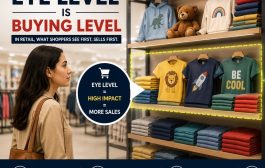
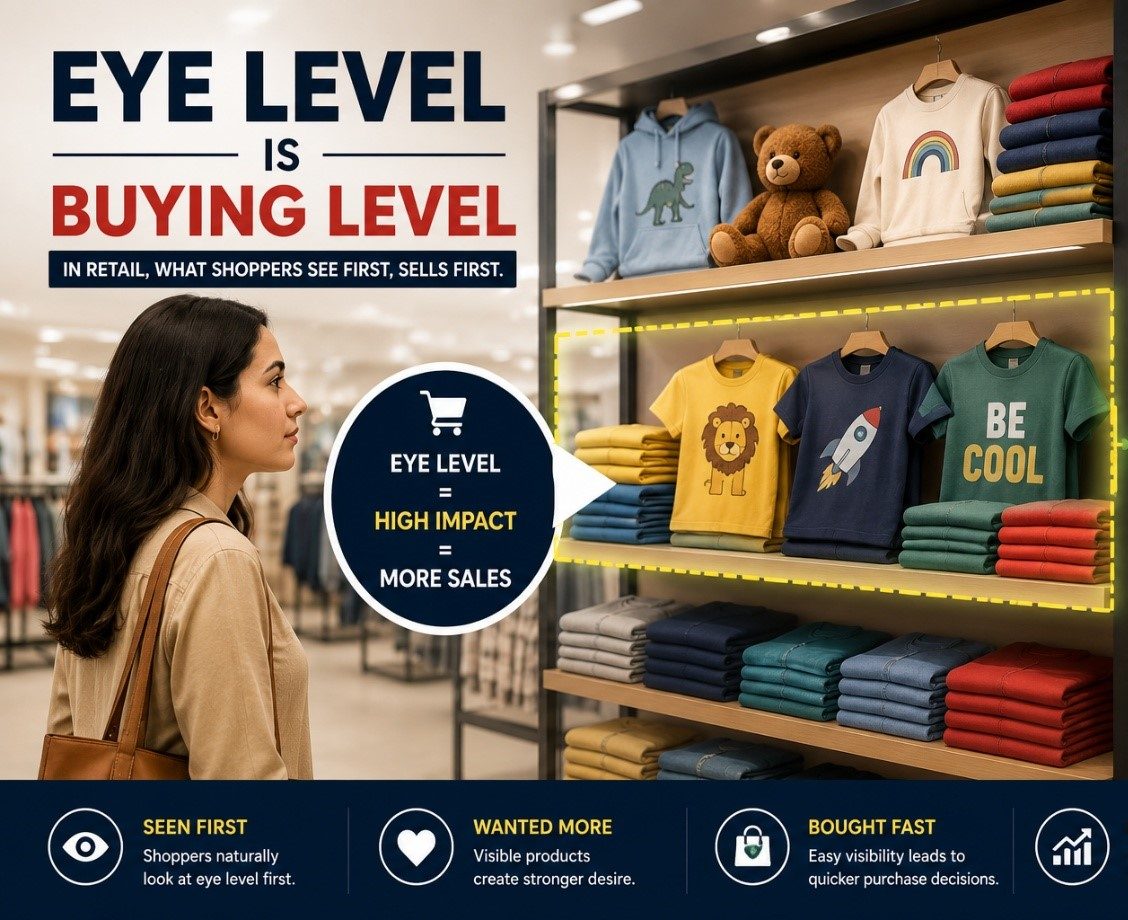
The phrase “eye level is buy level” is commonly used in retailing. Products placed around the customer’s natural eye level often receive greater attention.
Retailers may use this space for products with higher margins or important brands. However, eye-level placement does not guarantee a purchase. Price, packaging, brand familiarity, and customer needs also influence decisions.
For instance, a supermarket may place a new snack brand at eye level to attract attention. A familiar brand may still win the purchase because customers already trust it.
Product Placement and Impulse Buying
Retail product placement also connects closely with impulse buying.
Customers sometimes enter a store with a specific shopping list. However, attractive displays can encourage them to make additional purchases.
Checkout counters are a common example. Retailers often display chocolates, small snacks, batteries, personal-care products, or other low-cost items near the billing area.
The customer has already decided to complete the purchase. Therefore, an additional product can become an easy last-minute decision.
Cross-Merchandising
Retailers also place related products together. This approach is known as cross-merchandising.
For example:
- Pasta with pasta sauce
- Bread with butter
- Shampoo with conditioner
- Mobile phones with accessories
- Shoes with socks
- Coffee with biscuits
This arrangement saves customer time. At the same time, it can increase the number of products in the shopping basket.
Retail Product Placement in Supermarkets
Supermarkets provide many examples of retail product placement.
Essential products may appear deeper inside the store. This arrangement can encourage customers to walk through several sections before reaching them.
Retailers may place promotional displays along these routes. Consequently, customers encounter more products during their shopping journey.
Fresh products, bakery sections, and attractive displays can also create a positive first impression. Meanwhile, checkout areas encourage last-minute purchases.
Product Placement in Fashion Retail
Fashion stores use placement differently.
Retailers often create complete looks rather than displaying individual products. A mannequin may wear a shirt, trousers, shoes, and accessories.
This helps customers imagine how the products can work together.
For example, a customer who enters a store to buy a shirt may notice a complete outfit. The display can encourage the customer to consider trousers and accessories as well.
Thus, retail product placement becomes part of the brand experience.
Product Placement in Specialty Stores
Specialty stores also depend on effective product placement.
A pet store, for example, may create separate sections for food, toys, grooming products, and accessories. It may place dog food near feeding bowls or treats.
Similarly, an electronics store can place mobile phones near cases, chargers, earphones, and other accessories.
The goal is simple: help customers find related products easily.
The Role of Visual Merchandising
Retail product placement works closely with visual merchandising.
Visual merchandising includes:
- Product displays
- Lighting
- Colours
- Signage
- Mannequins
- Shelf arrangement
- Promotional boards
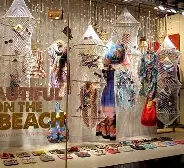
- Window displays
Together, these elements attract attention and communicate the brand’s personality.
A premium store may use minimal displays and more open space. In contrast, a discount retailer may use bold signs and promotional displays.
Therefore, placement should match the retailer’s positioning.
Retail Product Placement and Consumer Behaviour
Consumer behaviour helps explain why product placement works.
Customers respond to convenience, visibility, familiarity, price, emotions, and social influence. A well-positioned product can reduce the effort needed to find or evaluate it.
Furthermore, attractive displays can create curiosity.
For example, a customer may notice a new beverage because it appears in a special display. The customer may then pick it up, read the packaging, and decide to try it.
The placement has therefore helped move the customer through several stages of the buying process.
Digital Retail and Product Placement
Retail product placement is no longer limited to physical stores.
E-commerce platforms also use digital product placement. Online retailers decide which products appear on the homepage, search results, recommendation sections, and promotional banners.
For example, an online shopper searching for headphones may see recommended accessories such as charging cables or cases.
Similarly, platforms use customer data to recommend products based on previous searches and purchases.
As a result, digital merchandising has become an important part of modern retailing.
The Future of Retail Product Placement
Technology is changing how retailers approach product placement.
Artificial intelligence can analyse customer behaviour and identify popular products. Retailers can use this information to improve shelf arrangements and online recommendations.
Digital screens can also provide personalised offers. Smart shelves may help retailers monitor inventory and product movement.
At the same time, physical stores are becoming more experiential. Retailers are combining products, technology, entertainment, and personalised service.
Therefore, the future of retail product placement will focus not only on where a product is placed but also on how the customer experiences it.
Key Takeaway
It is a powerful retail management tool. It connects store layout with consumer behaviour and business objectives.
The right placement can improve visibility, encourage impulse purchases, support cross-selling, and make shopping easier.
However, successful retailers do not simply place products where they look attractive. They study customers and understand their shopping journeys.
Ultimately, effective retail product placement answers three important questions:
What should the customer notice?
What should the customer consider?
What should make the customer want to buy?
When retailers answer these questions effectively, product placement becomes more than shelf management. It becomes a strategic tool for creating better customer experiences and stronger retail performance.
🛒 Test Your Retail Knowledge
How well do you understand retail product placement? Answer these 5 quick questions and find out!