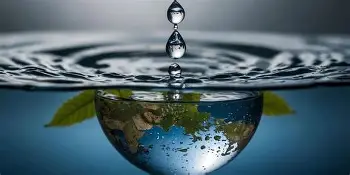
INTRODUCTION
Imagine turning on your tap one morning and finding that no water comes out.
For millions of people around the world, this is not a frightening possibility—it is a daily reality.
But Have You Ever Wondered
How much water do we use every day without even thinking about it?
From drinking and cooking to bathing and cleaning, water plays a role in almost every aspect of our lives.
The Growing Challenge
In our previous article on Waste Management, we explored how responsible disposal practices help protect the environment.
However, sustainability is not only about managing waste. It is also about protecting the resources we depend on every day.
One of the most valuable resources on Earth is water.
Although nearly 71% of the planet is covered with water, only a small percentage is available as fresh water for human use. As populations grow and climate patterns change, pressure on water resources continues to increase.
This is where Water Sustainability becomes essential.
What is Water Sustainability?
Water Sustainability means using water responsibly today while ensuring that future generations also have access to clean and sufficient water.
In simple terms, it is about using water wisely rather than wasting it.
Water Sustainability focuses on:
- Conserving water resources
- Preventing water pollution
- Improving water efficiency
- Protecting rivers, lakes, and groundwater
- Promoting responsible water use
The goal is to create a balance between human needs and environmental protection.
Why Water Sustainability Matters
Water is essential for life. Without it, people cannot survive, agriculture cannot produce food, and industries cannot operate effectively.
Therefore, Water Sustainability is critical for economic development, environmental protection, and public health.
Moreover, sustainable water practices help communities become more resilient to droughts, water shortages, and climate change. As a result, future generations are more likely to have access to safe and reliable water supplies.
In addition, protecting water resources helps maintain biodiversity and supports healthy ecosystems.
Smart Strategies for Water Sustainability
There are many ways individuals, communities, and governments can support Water Sustainability. Fortunately, even small improvements can create significant long-term benefits.
Water-Efficient Technologies
One of the easiest ways to conserve water is by using water-efficient technologies.
For example, low-flow showerheads, efficient faucets, and dual-flush toilets reduce water consumption without affecting daily comfort.
Consequently, households can lower both water usage and utility costs.
Greywater Systems
Another effective strategy is the use of greywater systems.
Instead of allowing lightly used water from sinks and showers to go directly into drains, it can be reused for gardening and landscaping purposes.
As a result, freshwater demand decreases while water efficiency improves.
Rainwater Harvesting
Rainwater harvesting is becoming increasingly popular in many regions.
Furthermore, collecting rainwater helps reduce dependence on municipal water supplies and provides an additional source of water during dry periods.
Sustainable Irrigation
Agriculture uses a large percentage of the world’s freshwater resources.
Therefore, adopting efficient irrigation methods is essential.
For instance, drip irrigation delivers water directly to plant roots, reducing evaporation and minimizing water wastage.
How You Can Support Water Sustainability
Although large-scale solutions are important, individual actions also play a significant role.
Turn Off the Tap
When brushing your teeth or washing dishes, turn off the tap whenever possible.
This simple habit can save significant amounts of water over time.
Fix Leaks Promptly
Even small leaks can waste hundreds of litres of water each year.
Therefore, repairing leaks quickly is one of the easiest ways to improve it.
Water Plants Wisely
Try watering plants early in the morning or later in the evening.
This helps reduce evaporation and ensures that more water reaches plant roots.
Spread Awareness
Finally, encourage family members, friends, and colleagues to adopt water-saving habits.
After all, sustainable change becomes more powerful when communities work together.
Conclusion
Water Sustainability is about protecting one of Earth’s most valuable resources.
While governments and organizations play an important role, individuals also have the power to make a difference.
By conserving water, adopting efficient technologies, and supporting responsible water management practices, we can help secure water resources for future generations.
Ultimately, every drop matters. Therefore, the actions we take today will determine the availability of water tomorrow.
Frequently Asked Questions About Water Sustainability
What is Water Sustainability?
Water Sustainability refers to using water responsibly while ensuring future generations have access to clean and sufficient water supplies.
Why is Water Sustainability important?
Water Sustainability helps conserve resources, protect ecosystems, support food production, and ensure long-term water security.
How can households improve Water Sustainability?
Households can conserve water by fixing leaks, installing water-efficient fixtures, harvesting rainwater, and reducing unnecessary water use.
What is rainwater harvesting?
Rainwater harvesting is the process of collecting and storing rainwater for future use.
How does Water Sustainability support the environment?
Water Sustainability protects rivers, lakes, groundwater resources, and ecosystems by encouraging responsible water use and conservation.
🔗 Previous Read
Waste Management: Turning Trash into Opportunity
Learn how responsible waste management helps reduce pollution and support environmental sustainability.
💧 Water Sustainability Quiz
How water-wise are you? Answer these 5 questions and discover your Water Sustainability Score.