Introduction
Have you ever wondered who invented firecrackers? Or why people started bursting crackers during celebrations? Think about Diwali. The moment someone lights a string of crackers, everyone knows what is coming next! Some cover their ears, some run away, while others wait excitedly to watch the colourful lights in the sky.But did you know that people did not originally invent firecrackers for Diwali celebrations? Let’s understand History of firecrackers.
The history of firecrackers is full of surprising stories. Let’s discover how they travelled from ancient China to our Indian festivals.
1.Did You Know? Firecrackers Were First Made from Bamboo!
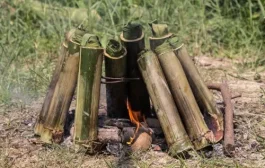
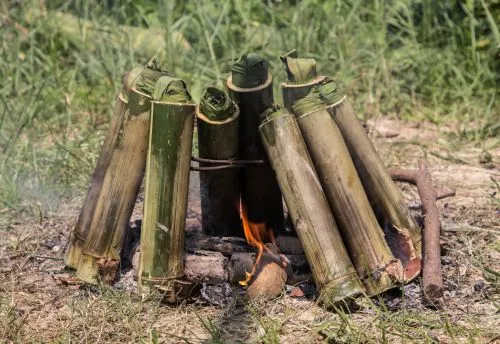
Imagine throwing a piece of bamboo into a fire and hearing a loud bang!
Hundreds of years ago, people in China noticed that hollow bamboo could burst with a loud cracking sound when heated.
They began using this sound during celebrations because they believed it would frighten away evil spirits and bring good luck.
These early firecrackers used bamboo instead of the colourful paper wrappers we see today.
Isn’t it interesting that something as simple as bamboo gave birth to a tradition that continues even today?
2.Did You Know? Firecrackers Are More Than 1,000 Years Old!
The next big development came around the ninth century, when people in China discovered gunpowder.
This mixture contained three main ingredients: saltpetre, charcoal and sulphur.
People packed the mixture into tubes and lit it to create a loud explosion. Curious minds then began experimenting with it and gradually developed the firecrackers and fireworks we recognise today.
One simple discovery changed the way people celebrated festivals!
3.Did You Know? Firecrackers Were Once a Royal Luxury in India?
Today, we can find firecrackers in shops before Diwali. But imagine a time when ordinary families could not easily afford them!
In India, rulers and wealthy families enjoyed fireworks during royal celebrations, weddings and festivals.
A historical account describes fireworks at the Mahanavami celebrations in the Vijayanagara kingdom in 1443.
Kings organised grand displays to entertain guests and mark special occasions. Later, during the eighteenth century, some Indian rulers also included fireworks in their Diwali celebrations.
So, what we see in our neighbourhoods today was once entertainment enjoyed mainly by kings and wealthy families!
4.Did You Know? Diwali Was Celebrated with Diyas Before Firecrackers Became Popular?
Diwali is traditionally the festival of lights.
Lighting oil lamps, decorating homes, making rangoli and welcoming prosperity are important parts of the celebration.
Over time, people began associating firecrackers with Diwali. However, crackers were an addition to the celebrations, not the original reason for observing the festival.
Today, families celebrate in different ways. Some enjoy sparklers and flower pots, while others prefer decorating their homes with diyas and watching community fireworks displays.
The beautiful thing about traditions is that they continue to evolve!
5.Did You Know? Sivakasi Is Known as India’s Firecracker Hub?
When we talk about firecrackers in India, we cannot miss Sivakasi in Tamil Nadu.
This town gradually earned a reputation for its fireworks, matchbox and printing industries.
During the twentieth century, Sivakasi developed a large fireworks manufacturing industry. Its dry climate also supported this growth.
Today, the town has earned a strong reputation for producing firecrackers that people across India buy during Diwali.
So, the next time you see a firecracker packet in a shop, remember the town that became famous for making them!
6.Did You Know? Fireworks Are Popular Across the World?
Firecrackers are not just an Indian tradition.
In China, people celebrate Chinese New Year with fireworks. Traditionally, they believed that loud sounds would keep evil spirits away.
In the United States, fireworks attract large crowds during Independence Day celebrations on July 4.
People in the United Kingdom celebrate Bonfire Night with fireworks on November 5.
In India, families enjoy fireworks during Diwali, weddings and several public celebrations.
Different countries have different reasons to celebrate, but people across the world share the excitement of watching the sky light up.
7.Did You Know? Firecrackers Also Have a Downside?
Fireworks create excitement, but they also produce smoke and noise.
Have you noticed how the air sometimes feels hazy after a night of heavy firecracker use?
Burning firecrackers releases smoke and tiny particles into the air. Loud explosions can disturb babies, senior citizens, people sensitive to noise and animals.
As a result, many people now prefer quieter and more responsible ways to celebrate.
Festivals are about happiness and togetherness. We can enjoy them while also being considerate towards others.
A Little Food for Thought!
From burning bamboo in ancient China to colourful fireworks in modern India, the history of firecrackers has travelled through centuries.
What started as a way to create loud sounds and ward off evil spirits gradually became a part of celebrations across the world.
But perhaps the most beautiful part of a festival is not how loudly we celebrate. It is the happiness we share with our families, friends and communities.
The next time you see fireworks lighting up the sky, remember that behind every spark is a story that began hundreds of years ago!
🎆 How Much Do You Know About Firecrackers?
Think you know everything about firecrackers? Take this quick 5-question challenge and test your knowledge!
1. In which country did the early use of firecrackers begin?
2. Which three ingredients make up traditional gunpowder?
3. In which Indian kingdom did a historical account describe fireworks during Mahanavami celebrations in 1443?
4. Which Indian town is popularly known as the firecracker hub?
5. Which of the following is a negative effect of firecrackers?
Challenge yourself! Learn something new and share the quiz with friends.