Introduction
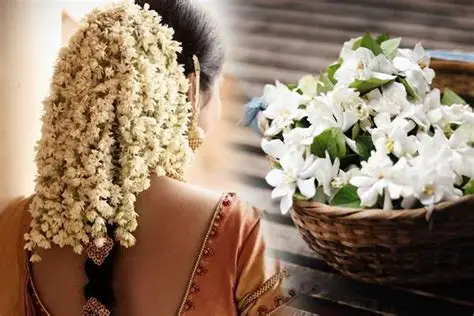
Walk through an Indian flower market early in the morning, and you will notice a beautiful sight: women choosing fresh flowers to adorn their hair. Indian women wearing flowers in hair is a tradition that has been part of everyday life for generations. From jasmine strings tucked into a bun to colourful flowers woven into long braids, these simple decorations add fragrance, beauty and cultural meaning.
But have you ever wondered why women wear flowers in their hair? What are these floral arrangements called, and which flowers are commonly used? Let us explore this beautiful Indian tradition.
What Is the Tradition of Indian Women Wearing Flowers in Hair Called?
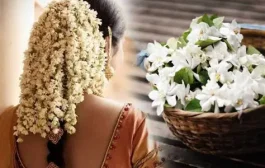
The most familiar name for this floral decoration is Gajra. A Gajra is a string or arrangement of fresh flowers, usually jasmine, worn around a bun or tied into the hair.
However, the name and style vary across regions:
- Gajra: A circular or decorative string of flowers, commonly worn around a bun.
- Veni: A floral decoration woven into or attached to a braid.
- Poola Jada: A traditional South Indian floral decoration for long braids.
- Maalai: A flower garland, sometimes used as a hair accessory.
These arrangements reflect the diversity of India’s regional traditions.
Why Do Indian Women Wear Flowers in Their Hair?
The tradition is not just about appearance. Flowers have several cultural and personal meanings.
1. Natural Beauty and Elegance
Fresh flowers add colour and charm to traditional as well as everyday outfits. A simple Gajra can make a hairstyle look elegant without the need for expensive accessories.
2. A Natural Fragrance
Jasmine, mogra and other fragrant flowers release a gentle natural scent. Many women enjoy wearing them because they provide a refreshing fragrance throughout the day.
3. Cultural and Religious Significance
Flowers hold an important place in Indian customs, festivals, weddings and religious ceremonies. Many people also associate fresh flowers with purity, positivity and auspicious occasions.
4. A Connection with Tradition
For many families, wearing flowers is a practice passed down through generations. Mothers and grandmothers introduce younger women to this custom, keeping it alive in everyday life.
Which Flowers Do Indian Women Wear in Their Hair?
The choice of flowers depends on availability, regional customs, personal preference and the occasion.
Popular Flowers Used in Gajra and Other Hair Decorations
1. Mogra (Arabian Jasmine)
Mogra is one of the most popular flowers used in Gajras. Its small white petals and strong fragrance make it a favourite for daily wear and special occasions.
2. Jui (Jasmine)
Jui is another fragrant white flower commonly used in Maharashtra. Women often wear it around a bun or braid.
3. Mallige (Jasmine)
Popular in Karnataka and other southern states, Mallige is widely used in traditional hair decorations.
4. Kanakambaram (Crossandra)
Known for its bright orange colour, Kanakambaram adds a vibrant touch to floral hair arrangements. It is especially popular in South Indian traditions.
5. Roses
Small rosebuds and petals add colour and elegance to bridal hairstyles and festive looks.
6. Marigold (Zendu)
Marigolds are commonly associated with festivals, celebrations and religious ceremonies. Their bright yellow and orange colours make them visually striking.
7. Shevanti (Chrysanthemum)
Shevanti flowers are available in different colours and are used in garlands and decorative arrangements.
8. Rajnigandha (Tuberose)
Rajnigandha is valued for its delicate appearance and pleasant fragrance. It is often used for special occasions.
Regional Styles of Indian Women Wearing Flowers in Hair
India’s floral hair traditions differ from one region to another.
- Maharashtra: Women commonly wear mogra or jui Gajras around their buns, especially with traditional sarees and during festivals.
- Tamil Nadu: Jasmine flowers are widely used in long, beautiful braid decorations.
- Karnataka: Mallige flowers are popular for everyday wear as well as celebrations.
- Andhra Pradesh and Telangana: Elaborate Poola Jada arrangements are often seen at weddings and traditional functions.
- Kerala: Jasmine and other fresh flowers complement traditional hairstyles and festive attire.
Although the styles differ, the love for fresh flowers connects these traditions.
Is Wearing Flowers in Hair Only for Married Women?
No. Wearing flowers in the hair is not restricted to married women. Girls, young women and older women may all enjoy this tradition.
Some communities associate particular floral styles with weddings or religious occasions. However, many women wear Gajras simply because they enjoy the fragrance and beauty of fresh flowers.
The Unsung Role of India’s Flower Sellers
Behind this everyday tradition are thousands of flower sellers who begin their work early in the morning. They sort, string and arrange fresh flowers into Gajras and garlands before customers arrive.
For many small vendors, preparing and selling flower strings is an important source of livelihood. The tradition therefore supports not only cultural practices but also local markets and livelihoods.
How Floral Traditions Keep Indian Culture Alive
Flowers are closely connected with India’s festivals, languages, customs and celebrations. Traditional floral decorations are a simple yet meaningful way of keeping cultural practices alive.
Is the Tradition of Indian Women Wearing Flowers in Hair Disappearing?
Modern hairstyles, changing lifestyles and the growing popularity of artificial accessories have influenced how people decorate their hair. Nevertheless, fresh flowers continue to hold a special place in Indian homes and celebrations.
Many women still buy jasmine or mogra on their way to work, while others choose elaborate floral arrangements for weddings and festivals. Social media has also introduced traditional Gajras and floral hairstyles to younger audiences in new ways.
The style may evolve, but the charm of fresh flowers remains.
Conclusion: A Beautiful Tradition That Continues to Bloom
The tradition of Indian women wearing flowers in hair is much more than a fashion statement. It represents beauty, fragrance, regional identity, family traditions and cultural continuity.
Whether it is a simple mogra Gajra worn on an ordinary morning or an elaborate floral braid at a wedding, these flowers carry stories that connect generations.
Perhaps that is the beauty of this tradition: something as simple as a string of fresh flowers can make an ordinary day feel special.