When the Taps Run Dry in the Middle East:
| What Is This About?
The Middle East powers the world with oil — but cannot find enough fresh water to drink on its own. These countries survive by turning seawater into drinking water using giant machines called desalination plants. In March 2026, those machines were bombed for the first time in history. This resource explains what happened, why it matters to everyone, and what can be done. |
THE PROBLEM
Why Is There No Fresh Water?
The Middle East and North Africa (MENA) holds only 2% of the world’s fresh water, yet hundreds of millions of people live there. Rainfall is very low. Underground water is running out. And climate change is making everything hotter and drier every year.
- Rivers like the Tigris and Euphrates have shrunk to shallow streams.
- Underground water reserves built up over thousands of years are being used up fast.
- Cities have grown enormously — far more people need far more water.
- The region warms 1.5 times faster than the global average.
| Climate Warning
If temperatures keep rising, the region could lose 75% of its available fresh water by 2050. That would be a disaster affecting hundreds of millions of people. |
THE SOLUTION
What Is Desalination?
Because natural fresh water is so scarce, Gulf nations built desalination plants — giant machines that remove salt from seawater and make it safe to drink. Without these plants, cities like Dubai, Riyadh, and Doha would run dry within just a few days.
Table 1: How Much Do Gulf Countries Depend on Desalination?
| Country | Water from Desalination | Daily Water Output | Risk if Plant Struck |
| Saudi Arabia | ~70% | ~9.5 million m³/day | Very High |
| UAE | ~95% | ~1.5 million m³/day | Critical |
| Qatar | ~90% | ~700,000 m³/day | Critical |
| Bahrain | ~90% | ~280,000 m³/day | Critical |
| Oman | ~86% | ~1.2 million m³/day | Very High |
| Kuwait | ~80% | ~900,000 m³/day | Very High |
| Iran (Tehran) | ~15% | Limited reserves | High |
Source: World Resources Institute, AQUASTAT, Gulf Cooperation Council Reports, 2025-26
THE ATTACK
The Big Problem: These Plants Are Being Bombed
In March 2026, military strikes hit desalination plants for the first time in modern history. This is extremely dangerous because these plants also generate electricity. Destroy the plant and you knock out both water AND power at the same time.
Table 2: Desalination Plants Attacked — March 2026 Timeline
| Date | Location | What Happened |
| Early Mar 2026 | Qeshm Island, Iran | ~30 villages lost water access immediately after the strike |
| Mid Mar 2026 | Bahrain | Main plant hit; residents told to store emergency water |
| Mid Mar 2026 | Near Dubai, UAE | Strikes near Jebel Ali port; plant put on full alert |
| Mid Mar 2026 | Kuwait (Doha West) | Partial shutdown triggered city-wide water rationing |
Source: CNN, Euronews, Conflict & Environment Observatory, March 2026
| Why This Is So Dangerous
Many desalination plants also produce electricity at the same time. If a plant is destroyed, both water AND power are cut off together. Without electricity, pumps stop. Without pumps, water stops reaching homes, hospitals, and schools. A modern city can face crisis within days. |
| “Attacks on water infrastructure must stop. Water is a human right, not a military target.”
— UNICEF, March 2026 |
GLOBAL IMPACT
Why the Whole World Should Care
This is not just a Middle East problem. It affects every country on Earth.
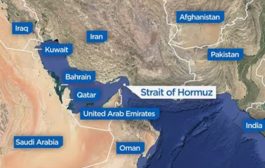
- Oil prices rise worldwide when the Strait of Hormuz is threatened — 20% of global oil passes through it.
- Food gets more expensive — 33% of the world’s fertiliser trade goes through the same route.
- More refugees — when people have no water, they leave their homes, adding to the global refugee crisis.
Table 3: The Big Numbers at a Glance
| Number | What It Means | |
| 💧 | 2% | Share of the world’s freshwater found in the MENA region |
| 🌡 | 1.5x | MENA is warming 1.5 times faster than the global average |
| 🛢 | 20% | World oil passing through the Strait of Hormuz every day |
| 🌾 | 33% | Global fertiliser trade passing through the same Strait |
| 🏭 | 12 | Of the 17 most water-stressed nations are in MENA |
| 📉 | 14% | Projected GDP loss for MENA countries by 2050 |
| 😟 | 75% | Possible drop in freshwater by 2050 in the worst-case scenario |
Source: UN, World Bank, IPCC, Conflict & Environment Observatory, 2025-26
REAL-WORLD STORY
The Day the Taps Went Silent
Read this short real-world story, then answer the discussion questions below.
| THE SITUATION
The Middle East powers the world with oil. But its people drink from the sea. Countries like Saudi Arabia, UAE, Qatar, and Bahrain sit on enormous oil wealth yet have almost no natural fresh water. Their entire populations survive on desalination plants — giant machines that strip salt from seawater. These plants are not just infrastructure. They are lifelines. THE TURNING POINT In March 2026, military conflict between Iran and a US-led coalition escalated. For the first time in modern history, desalination plants became military targets. Plants in Iran, Bahrain, near Dubai, and in Kuwait were struck within days of each other. Villages lost water overnight. Hospitals went on emergency rations. Tehran reportedly had less than two weeks of water reserves left. THE GLOBAL RIPPLE Iran threatened to close the Strait of Hormuz — the narrow sea passage through which 20% of world oil and 33% of fertiliser shipments travel every day. Oil prices surged worldwide. Ships rerouted around Africa. Food prices began climbing from South Asia to East Africa. A regional water crisis had become a global economic shock within days. THE BIG QUESTION If desalination plants can be bombed, and millions of people have no other source of water — has water become the most powerful weapon of the 21st century? |
SOLUTIONS
Is There Hope?
Yes — but only if the attacks stop and leaders choose to cooperate. The technology already exists.
Table 4: Solutions
| Solution | How It Helps |
| Solar Desalination | Plants powered by sunlight — cheaper, cleaner, cannot be blocked |
| Water Recycling | Israel recycles ~90% of used water. Other nations are learning this. |
| Smart Farming | New farming methods use far less water than traditional ones |
| River Agreements | Countries sharing rivers can cooperate instead of fighting over water |
| Renewable Energy | Clean power keeps desalination plants running without oil dependency |
| Did You Know?
Israel recycles nearly 90% of its wastewater for farming. The UAE is building solar-powered desalination plants that run entirely on sunlight. These solutions are already working — they just need investment and the will to act. |
DISCUSSION QUESTIONS
Think and Discuss
Why are desalination plants a more dangerous target than oil facilities in a conflict?
If a country’s entire water supply can be cut off in one airstrike, what does that mean for national security?
Should attacking a water plant be treated as a war crime?
How can Gulf nations reduce their dependence on desalination plants?
In what ways does the water crisis in the Middle East affect someone living in India, Kenya, or the UK?
GLOSSARY
Important Words Explained
| Word | Simple Meaning |
| Desalination | Removing salt from seawater to make it safe to drink. |
| MENA | Middle East and North Africa — countries like Egypt, Saudi Arabia, Iran, and UAE. |
| Strait of Hormuz | A narrow sea passage between Iran and Oman. 20% of world oil travels through it daily. |
| Water Stress | When there is not enough fresh water for people, farms, and industries in a region. |
| Aquifer | A large underground layer of water stored in rock or soil, like a natural underground lake. |
| Cogeneration Plant | A plant producing both electricity and water together. Destroying it cuts off both at once. |
| “The world fights over oil. The next war will be over water.”
— Water Security Analysts, 2026 |