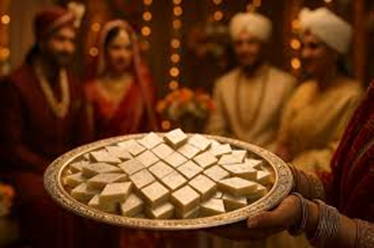
Few Indian sweets evoke the same sense of celebration and nostalgia as Kaju Katli. With its delicate diamond shape, smooth texture, and melt-in-the-mouth richness, this cashew-based mithai is a staple during Diwali, weddings, and festive gatherings.
But beyond its elegant simplicity lies a story woven with history, craftsmanship, and royal indulgence.
A Royal Origin
The origins of Kaju Katli (also known as Kaju Barfi) are often traced back to the Mughal era, a time when culinary innovation reached new heights in Indian royal kitchens.
According to legend, royal chefs in the court of Emperor Bahadur Shah Zafar, the last Mughal ruler, first crafted an early version of this sweet to impress the emperor and his elite court. Cashews, considered luxurious and exotic at the time, were finely ground and combined with sugar and ghee to produce a smooth, rich delicacy that quickly became a favorite.
However, some food historians credit the refinement of Kaju Katli to Maratha kitchens or the Chalukya dynasty of the Deccan, both known for incorporating nuts and dry fruits into their royal cuisine.
While the exact origin may be debated, one fact is undeniable: Kaju Katli was never meant to be ordinary—it was born from a desire to create something exceptional.
The Art of Making Kaju Katli
Making Kaju Katli is both a science and an art. It begins with selecting the finest cashew nuts, which are soaked and ground into a fine, smooth powder. This is carefully cooked with sugar syrup until the mixture reaches just the right consistency—firm enough to hold its shape, yet soft enough to melt on the tongue.
Once ready, the mixture is poured onto a greased surface, rolled into a thin sheet, and cut into its iconic diamond-shaped pieces.
The final flourish? A delicate layer of edible silver leaf—known as varak. This shimmering garnish not only symbolizes luxury and purity, but also harks back to ancient Indian culinary traditions, where silver was believed to have medicinal and antimicrobial properties and was often used in royal feasts.
Why It’s Called “Kaju Katli”
The name comes from two Hindi words:
- Kaju = Cashew
- Katli = Thin slice
“Katli” refers to the wafer-thin, delicate cuts of the sweet, emphasizing its elegant simplicity—just cashew and sugar, in perfect harmony.
Modern-Day Popularity
Despite its royal roots, Kaju Katli has stood the test of time and firmly entrenched itself in modern Indian celebrations. During Diwali, it’s one of the most gifted sweets, often seen in beautifully wrapped boxes exchanged between friends, families, and colleagues.
What sets it apart from heavier sweets made with khoya or deep-fried ingredients is its lighter, cleaner profile, making it a favorite among health-conscious dessert lovers.
Modern innovations have led to new variants like:
- Kesar Kaju Katli (saffron-infused)
- Chocolate Katli
- Vegan and sugar-free versions
Yet, the classic version continues to hold a timeless appeal.
More Than Just a Sweet
What makes Kaju Katli truly special isn’t just its flavor—it’s the emotion it evokes. For many, it’s a reminder of childhood Diwalis, boxes of mithai shared among neighbors, or the joy of discovering hidden treats saved by doting grandparents.
It’s a dessert that connects generations, cultures, and memories—a simple slice that carries profound meaning.
Conclusion: A Slice of Culinary Heritage
Kaju Katli is more than just a sweet—it’s a piece of India’s rich culinary legacy. From royal courts to family gatherings, from ancient kitchens to modern sweet shops, its journey reflects the country’s love for turning simple ingredients into extraordinary experiences.
So the next time you bite into a piece of Kaju Katli, pause and savor not just the taste—but the centuries of tradition, craftsmanship, and celebration behind it.