Retail Formats are the foundation of the retail industry and explain how products reach customers through different types of retail businesses. From traditional kirana stores and weekly markets to supermarkets, hypermarkets, shopping malls, and e-commerce, retail formats have continuously evolved to meet changing customer needs. This session explores the evolution of retail formats, major theories of retail development, the retail life cycle, and different retail business models that shape today’s retail environment.
Evolution of Retail Formats
The evolution of retail formats reflects how retailing has transformed from simple local markets to sophisticated omnichannel retailing.
Initially, people purchased goods from village markets, haats, mandis, and local kirana stores. These retailers mainly served nearby communities and stocked limited products. However, industrialization, better transportation, improved communication, and mass production enabled retailers to expand their reach. As consumer incomes increased and urban populations grew, organized retail formats such as supermarkets, department stores, hypermarkets, shopping malls, and online stores emerged.
Today, retailers combine physical stores with digital platforms to create a seamless shopping experience, known as omnichannel retailing.
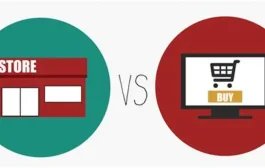
Traditional vs Modern Retail Formats
Retail formats can broadly be classified into traditional retail and modern retail.
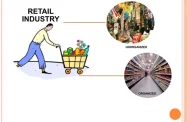
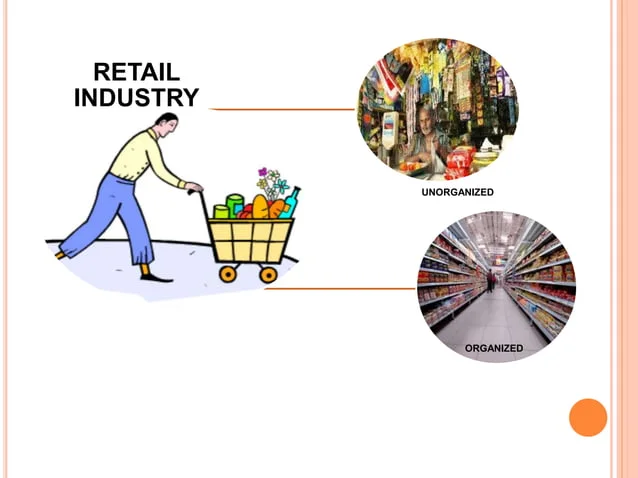
Traditional retail includes kirana stores, local grocery shops, weekly markets, haats, mandis, and melas. These stores focus on personalized service, flexible pricing, and strong customer relationships.
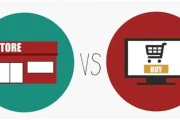
Modern retail includes supermarkets, hypermarkets, department stores, convenience stores, specialty stores, discount stores, shopping malls, and e-commerce platforms. These retailers emphasize standardized pricing, self-service, technology integration, larger product assortments, and efficient supply chain management.
Both formats continue to coexist in India, serving different customer segments.
Factors Driving the Evolution of Retail Formats
Several factors have influenced the development of modern retail formats.
- Rapid urbanization
- Rising disposable income
- Industrial Revolution and mass production
- Technological advancements
- Improved transportation and logistics
- Digital payments and e-commerce
- Changing consumer lifestyles
- Smartphone and internet penetration
These factors have encouraged retailers to adopt innovative formats that offer greater convenience and efficiency.
Theories of Retail Development
Retail scholars have proposed several theories to explain how retail formats evolve over time.
Wheel of Retailing Theory
The Wheel of Retailing Theory explains that new retailers generally enter the market with low prices, limited services, and simple facilities. As they become successful, they gradually improve their stores, increase services, expand product offerings, and charge higher prices. Eventually, they become vulnerable to newer low-cost competitors, and the cycle begins again.
Examples include discount stores evolving into full-service supermarkets before facing competition from online retailers.
Conflict Theory
The Conflict Theory suggests that new retail formats emerge by competing with existing retailers. The competition forces traditional retailers to innovate and improve their services.
For example, discount stores challenged department stores by offering lower prices. Later, online retailers challenged both formats by providing greater convenience.
Competition continuously drives retail innovation.
Environmental Theory
The Environmental Theory states that retailers survive only if they successfully adapt to their changing environment. Customer preferences, economic conditions, government regulations, competition, and technological developments influence retail success.
Retailers that quickly respond to market changes remain competitive, while those that fail to adapt eventually decline.
Retail Accordion Theory
The Retail Accordion Theory explains that retail institutions alternate between offering a broad assortment of merchandise and specializing in limited product categories. Over time, specialized retailers may diversify again, creating a cycle similar to an accordion expanding and contracting.
For example, department stores offer a wide variety of products, while specialty stores focus on specific product categories such as electronics or sports equipment.
Retail Life Cycle
Like products, retail formats also pass through different stages during their existence.
Innovation Stage: New retail concepts enter the market with unique offerings and experience rapid growth.
Growth Stage: Customer acceptance increases, sales grow rapidly, and competitors enter the market.
Maturity Stage: Growth slows due to market saturation and intense competition. Retailers focus on innovation, repositioning, and customer loyalty.
Decline Stage: Retailers lose their competitive advantage because of changing customer preferences, new technologies, or better retail formats.
Understanding the retail life cycle helps retailers develop appropriate marketing and growth strategies.
Retail Business Models
A retail business model defines how a retailer creates value for customers while generating profits.
Common retail business models include:
- Department Stores
- Supermarkets
- Hypermarkets
- Convenience Stores
- Specialty Stores
- Discount Stores
- Warehouse Clubs
- Franchise Retailing
- E-commerce Retailing
- Omnichannel Retailing
Each business model targets different customer needs based on pricing, product assortment, convenience, and service quality.
Key Learning Outcomes
After studying Retail Formats, students will be able to:
- Understand the concept of retail formats.
- Explain the evolution of retailing.
- Differentiate between traditional and modern retail formats.
- Discuss the major theories of retail development.
- Understand the retail life cycle.
- Evaluate different retail business models.
- Apply retail concepts to real-world retail organizations.
Conclusion
Retail Formats continue to evolve as technology, consumer behaviour, and market competition reshape the retail landscape. From traditional kirana stores to digital marketplaces, retailers constantly innovate to meet changing customer expectations. Understanding it, their evolution, development theories, and business models enables students and professionals to appreciate how the retail industry adapts to changing market conditions while creating value for customers.